
Chapter 17: Review and monitor
17.1 Assumptions
If you’ve read and followed all the advice in previous chapters, you can skip directly to Section 17.2. However, if you’ve come directly to this chapter because “my risk assessments are all fine; we just think we might need to improve our review process” please check a few things with those fine risk assessments first. The list below are pointers for any review of existing risk assessments – as well as assumptions I’m making about your risk assessments before you read the rest of this chapter.
- Do you have a clearly defined scope for your risk assessment? See Chapter 2.
- Have you identified and described your hazards accurately? For example, if you have “slips and trips” in the hazard column, you won’t know what you are reviewing. See Chapter 1 to Chapter 3.
- Do you understand who can be harmed and how, and how this might vary? Your review might need to assess the impact of your risk management on multiple parties, in case it works for some but not for others. See Chapter 4.
- Have you measured the things that can be measured (like noise and vibration), used standard scales where well-defined (such as Hazard groups for COSHH, Priority and Material assessment scores for asbestos) and provided harm statements for everything else? See Chapter 8.
- Does your risk assessment as documented make it clear which controls are:
- Already in place?
- Planned but not yet in place?
- Needed on a regular basis (daily, weekly, annually etc)
See Chapter 13 onwards for more on documenting your risk assessment.
Chapter 16 provided some practical ideas on how to document the significant findings of your risk assessments, in a way that made it more obvious what controls need to be checked. In this chapter, we’ll see how to check that those controls are working. But first, let’s look first at the legal and regulatory position on “review”.
1990 Caparo Industries v Dickman. Nothing to do with safety, but a lot to do with duty of care.
1991 Copoc, Alcock and others v. Wright. A case against the Chief Constable of the South Yorkshire Police which rules that families who had watched the Hillsborough disaster unfold on TV, knowing their loved ones were in the crowd, could not claim for the distress caused.
1994 Walker v Northumberland County Council. How the duty of care requires different actions for different employees.
1997 Durnan Barnes v Stockton-On-Tees Borough Council. Safe systems of work and ‘common sense‘.
17.2 UK legislation on review and monitoring
Regulation 3 of the UK Management of Health and Safety at Work Regulations (MHSW, 1999) includes the following instructions on the review of risk assessments:
3 (3) Any assessment such as is referred to in paragraph (1) or (2) shall be reviewed by the employer or self-employed person who made it if –
(a) there is reason to suspect that it is no longer valid; or
(b) there has been a significant change in the matters to which it relates; and where as a result of any such review changes to an assessment are required, the employer or self-employed person concerned shall make them.
The emphasis here is on review of the whole risk assessment, after some period of time has passed since the risk assessment was considered suitable and sufficient.
While most organisations at least pay lip service to MHSW Regulation 3 (even if this getting an admin person to change the date, logo and font every other year) I’ve found organisations are less good at meeting the requirement of Regulation 5:
5 (1) Every employer shall make and give effect to such arrangements as are appropriate, having regard to the nature of his activities and the size of his undertaking, for the effective planning, organisation, control, monitoring and review of the preventive and protective measures.
If that’s not clear (and the ambiguous use of words like “control” and “measures” doesn’t help) this means you can’t wait a year to review your risk assessment – you must consider in advance how you will monitor the effectiveness of the control measures you have written into your risk assessment.
Some hazard-specific legislation is clearer about this requirement. For example the Control of Substances Hazardous to Health Regulations 9(1) states:
Every employer who provides any control measure to meet the requirements of regulation 7 shall ensure that (a) in the case of plant and equipment, including engineering controls and personal protective equipment, it is maintained in an efficient state, in efficient working order, in good repair and in a clean condition; and (b) in the case of the provision of systems of work and supervision and of any other measure, it is reviewed at suitable intervals and revised if necessary.
Ask yourself:
Can you find the relevant clauses in any legislation that impacts you? I’ve given some answers in Appendix 2.
What MHSW Regulation 5 and hazard specific equivalents require is not just a once a year check, but an ongoing process of vigilance of both technical (engineering) systems and human systems. If equipment intended to protect is not working you need to know as soon as possible; if people are not following safe systems of work (or if the systems of work are not safe), you need to do something.
Some hazard-based legislation provides an indicator as to what might be a “significant change” under 3(3)(b) or part of your arrangements under 5 (1). See Table 17.1 for examples. There is a more detailed version of this table with a full list of legislation in Appendix 2.
Table 17.1: Examples of review triggers in UK legislation and guidance
| Review trigger | Evidence |
|---|---|
| Health surveillance and assessment | Health surveillance suggests that despite controls, an employee suffers harm from exposure to relevant hazard. |
| HR records | Sickness absence reports. Resignations, especially where clusters are seen in workers under a single line manager (see Box 17.1). |
| Measurements and monitoring | Water temperature measuring and rust monitoring Increase in noise or vibration levels |
| Accidents or near misses | Manual handling accident, incident or ill-health Legionnaires disease or legionellosis All accident investigation findings External news reports |
| People | When you employ: young people, expectant or new mothers, older workers, those with pre-existing health conditions or disabilities. When you change staffing levels or employment mix |
| Process or methods, plant, equipment or tools, materials or substances, work location | When you plan to: move mobile work equipment; change manual handling tasks or processes; change water system, use of the water, or use of the building; modify a process, building or substance used. |
| New information including experience | Change to law, guidance, standards, good and best practice; damage to stock/ product; observations or suggestions from workers. |
| Calendar-based – minimum triggers where no other trigger applies. | A “reasonable” period for review, depending on risk, variability, control. Asbestos management plans – at least once every 12 months COMAH safety reports at least every five years. |
Box 17.1: Patterns of absence and resignations show stress management controls not effective
I worked with a client where one department had a rapid turnover of staff – a pattern had emerged. They worked long hours. Then their attendance became patchy, and periods of sick leave became longer. Then they resigned. It became clear that all these people worked for the same line manager, whose management style appeared to be to work through the six HSE stress management standards – and break each one.
Monitoring sickness absence records for musculoskeletal disorders and other conditions that could be work-related could provide an indication of ineffective controls. However, too many organisations still don’t ask employees when absence is work-related or not, and those that do might be reluctant to share the data with safety teams.
17.3 Case law
A prosecution of BIFFA in 2025 illustrates how MHSW Regulation 5 is considered breached. It is not sufficient to assess the risks and document the controls you think will protect people. It is not enough to be able to show you trained people once.
In one week, CCTV monitoring the routes used by vehicles and workers showed pedestrians crossing into vehicle routes nearly 100 times. They were not told this was wrong, or sent back, or provided with additional information. No one reviewed the routes to see if there was a better alternative. So when a worker doing the same thing was killed, Biffa could not argue that there was any “monitoring and review” of the controls. Biffa was fined £2.5 million. See further details in Appendix 1. Use of CCTV was not new in 2025 – in 2016 the HSE prosecuted Rainbow Waste Management Ltd following the death of a 24-year old worker, who was crushed by the bucket of a loader vehicle. In the ten days before the incident, the HSE identified over 200 examples of unsafe working practices such as workers being lifted in the bucket. The employer could not argue that the control measures in place were effective.
Other cases show that even where no one is killed, organisations can be prosecuted for failing to monitor and review controls. For example, for failing to monitor, examine and test local exhaust ventilations systems, or failing to respond to the results of health surveillance on people suffering from HAVS symptoms.
If the regulator finds evidence that your controls were not effective (for example, by looking at common behaviours on your own CCTV cameras), the conclusion is that you also had that information available. If, despite that, you did nothing to change the controls or make the existing controls more effective, then you will be in breach of MHSW Regulation 5(1). In other words, even if you have set all the triggers for review in Table 17.1, you need to take reasonable steps to check that your controls are in place, and effective.
17.4 HSE advice on reviewing controls
Note: all versions of INDG 136 are linked here.
The 2019 updated advice on this step is quite concise:
You must review the controls you have put in place to make sure they are working. You should also review them if:
- they may no longer be effective
- there are changes in the workplace that could lead to new risks such as changes to:
- staff
- a process
- the substances or equipment used
Also consider a review if your workers have spotted any problems or there have been any accidents or near misses.
Update your risk assessment record with any changes you make.
The second part of this will be familiar, even to those who haven’t looked at the five steps since the first edition of INDG 136 in 1998. Initially, this step was called “Review your risk assessment and update if necessary.” The emphasis on review only when it was needed matched the instruction in Regulation 3 of MHSW (unchanged between the 1992 and 1999 versions of the regulations) but didn’t explain the more complicated requirement in Regulation 5(1) cited earlier (which was Regulation 4(1) in MHSW 1992).
There was an explicit instruction in the first edition of INDG 136 not to “amend your assessment for every trivial change, or still more, for each new job.” There is a further suggestion that you should review your assessment “from time to time to make sure that the precautions are still working effectively” but there was no instruction to check the effectiveness of the precautions (that is, the controls) at the time of producing the first risk assessment.
The second edition provided a little more detail on timing of the review, suggesting “Every year or so formally review where you are, to make sure you are still improving, or at least not sliding back.” The annual review idea was further reinforced in that edition with the advice “Why not set a review date for this risk assessment now? Write it down and note it in your diary as an annual event.” Although there was advice that you might need to change the risk assessment in between this annual review festival, it suggested you need only think about it in between “if there is a significant change.”
By the fourth edition of INDG 136 (2014) there was a hint that the review might be needed “on an ongoing basis” but the idea of an annual review was already strongly written into the health and safety policies and safety management systems of many organisations. Managers saw the annual event not just as a necessary process, but as a sufficient process. Significant changes had to be pretty major to trigger a review outside of the annual calendar.
Look again at that first short sentence in the 2019 guidance:
You must review the controls you have put in place to make sure they are working.
That’s not about an annual review of the risk assessment. It’s about knowing on an “ongoing basis” that your controls are effective
Ask yourself:
You are responsible for the health and safety of a large supermarket chain. You know that slipping and tripping are the single most common cause of major injury in UK workplaces, and in the retail industry. You know how bad the publicity is when a customer is injured. You have identified that one cause of slips is a wet patch on the floor, such as those that can occur from the condensate from refrigerator units.
- What controls do you have in place?
- How do you review these controls?
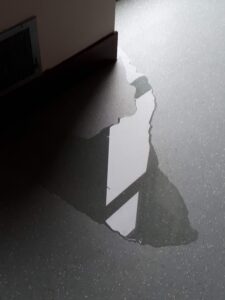
We’ll look at cake first, and then come back to the fridge.
17.5 Cake analogy
To consider the “ongoing” review compared with the regular review, let’s think about cake.
Ask yourself:
If you made a cake every week with the same recipe and didn’t ever eat any of the cake, how would you know if the cake was any good? Perhaps you’ve decided you’ll try a slice once you’ve been making it for a year or two. When you eventually sample the cake, it tastes horrible. Or maybe you wait until someone gets food poisoning. What’s wrong with the cake? Is it a bad recipe, or are you following the recipe in the wrong way?
We could ask a comparable question about risk controls:
Ask yourself:
How do you know that the controls written into your risk assessment are any good? Are you going to wait for a year to check? Or worse, until there is an accident (or ill-health report)?
With our cake you might do two things to check that the recipe and the application of the recipe were correct:
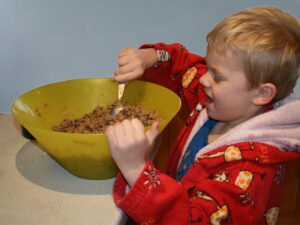
1. You could watch someone making the cake to see if they are following the recipe.
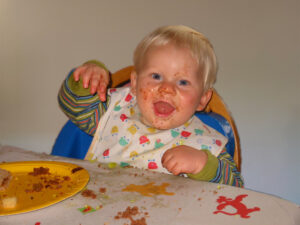
2. You could ask more people to eat more cake more often to make sure it tastes right.
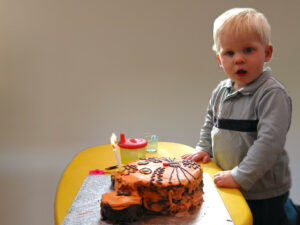
Unfortunately, what happens too often in health and safety systems is that we stand by, not even looking at the “cake”, and assume the controls we have written down will make it ok..
See Table 17.2 for improvement options based on these two tasks.
Table 17.2: Cake improvement plan options
| 1b Recipe isn’t followed | Does the written recipe need changing to match practice? | Is the cake even worse when the recipe is followed? If not, what help is needed to follow the recipe? |
| 1a Recipe is followed | Current recipe and practice are good – but could it be better? | The recipe needs to be changed (or the ingredients are bad) |
| 2a Cake tastes good | 2b Cake tastes bad |
|---|
If you watch most experienced bakers who make the most delicious cakes, they’re often not following the recipe precisely. They know where to add less sugar or more salt, or substitute some of the flour for ground almonds, or add extra raisins. Then someone else tries to follow the documented recipe, and they are surprised it doesn’t taste the same. This could be the 1b / 2a situation.
Similarly, sometimes the reason experienced workers don’t have accidents is not because the procedures are good, but because they have found workarounds to overcome impractical steps, or plainly wrong steps. If these are effective, we need to capture the improvements they’ve made, review them and add to the written procedures. The x-ray machine example provided in Chapter 12 illustrates this issue.
17.6 Generating reactive and active checks
Table 17.3 provides examples of checks equivalent to eating the cake and watching the chef.
| Reactive checks (eat the cake) | Active checks (watch the chef) |
|---|---|
| Accident reports and statistics Ill-health and absence records Near misses Equipment fault reports Health surveillance records | Regular routine visual inspections Specialist inspections or checks of key pieces of plant, such as lifting equipment, local exhaust ventilation and work tools Audits of housekeeping and documents Training records Meetings with workers to hear their concerns and suggestions |
In 17.4 I asked you what controls you’d have in place for the supermarket refrigerator example described. Hopefully, you suggested at least the following:
- Regular maintenance of the fridges.
- Drains under the floor to collect condensate water.
- Reporting and maintenance arrangements where wet patches occur.
Note down any more ideas you have about reactive and active checks as you read through the case study in Box 17.2.
Box 17.2: Supermarket fridge case study
Supermarket staff noticed puddles around refrigeration units. They mopped them up, but the puddles reoccurred more quickly than they could deal with them.
Staff reported the problem and maintenance engineers were called in. Working with the supermarket staff, they used cleaning machines to suck up the liquid. But the puddles reoccurred.
In between engineer visits staff used flattened cardboard to soak up the leaks, adding a trip hazard to the aisles. When the problem was at its worst, management turned the units off and closed the aisles to customers, losing revenue and wasting products.
There was a similar problem in the bakery, and it was identified that the drains had blocked due to a build-up of bacteria setting the leakage into a jelly-like consistency. The drains in the bakery were unblocked and the problem improved. However, the same action was not taken for all the blocked drains in the shop.
A 91-year old customer in the shop slipped in one of the puddles, and broke his hip. The supermarket fine was £733,000.
Compare your suggestions for reactive and active checks that might have prevented this accident with my suggestions in Table 17.4.
Table 17.4: Reactive and Active (proactive) checks on controls
| Reactive checks | Active checks |
|---|---|
| Reports of slips or near-slips on wet surfaces near refrigerators Reports of wet patches (from staff, from customers) Reports of blocked drains Number of times maintenance staff are called out for reactive (breakdown) maintenance Housekeeping checks noting the use of cardboard to soak up leaks | Checks that planned preventative maintenance (PPM) is taking place and is effective Checks on the timeliness, quality and trends of reactive maintenance, eg does the same problem re-occur? Independent checks of drip trays, seals etc Inspections to make sure the drains collect condensate water sufficiently effectively to keep floors clear – consider seasonal variations when ambient temperature changes Asking staff about their understanding of reporting arrangements Asking engineers about their work – were they thinking about the drains, the refrigerator or only the puddles? |
Although there is a lot of emphasis on active checks, responding to reactive checks would have made a difference in this case. The reports of wet patches in the vicinity, and blocked drains elsewhere in the store could have pointed towards the need to check other drains in the shop, including those near the refrigerators where the accident occurred. For organisations with multiple branches, it should trigger a check in all branches. Similarly, repeated calls to maintenance for the same fault should have alerted someone to the problem.
17.7 Reviewing applicability of controls for similar tasks
I want to return to the quote from the first edition of INDG 136 (1998), in full:
Don’t amend your assessment for every trivial change, or still more, for each new job, but if a new job introduces significant new hazards of its own, you will want to consider them in their own right.
This advice on the extent to which a risk assessment covers similar tasks didn’t appear in future editions of INDG 136, or the 2019 website replacement. The never issued draft of Revision 5 in 2016 mentions ‘model assessments’ under the ‘evaluate the risk’ step, but asks only that the reader adapts for ‘hazards and risks’ not for controls.
When are changes ‘trivial’ and when do changes mean we need to review the controls? If I have a risk assessment for changing a lightbulb, can I use it for changing a fluorescent tube? When fluorescent tubes and filament bulbs are replaced with LEDs are the existing controls sufficient, or do I need new ones? We’re back to the circularity problem described in Chapter 1 – we couldn’t complete Step 1: Identify the hazard, without Step 2: Assess the risk. Similarly here, we can’t decide if the change is significant enough to review without reviewing the change and its impact on risk.
In Chapter 14 we looked at two cases from the 1950s where window cleaners were injured. The cases support the argument that where controls normally applied are less likely to be effective, and other more effective controls are available, it is the responsibility of the employer to make these controls clear to the worker. In relation to risk assessment review, these cases can be seen as evidence that if a worker has to make up new controls because the controls in the risk assessment provided for a job aren’t effective, you need a different version of that risk assessment, or at least have those controls added to the assessment (like documenting the reduced sugar or the added raisins in the recipe).
In Drummond v British Building Cleaners Ltd (1954) one of the judges explained that “a window-cleaning employer cannot, for example, be expected to lay out the job window by window” but could be required to consider variations for each different kind of window.
If we review the effectiveness of controls when planning each activity, the assessment of triviality becomes second nature. If there had been a risk assessment for window cleaning in the 1950s it might have stated the control as “hold onto the open window while standing on the windowsill.” If the window cleaner had been nudged to consider the problem of holding onto a sash window, they might have realised the ineffectiveness of this control and instead considered the use of wedges to hold the window open. For a more risk-averse 21st Century, if the control is now attaching a harness to a fixed point, the pre-job review of the control should identify where there is no fixed attachment point.
Risk assessments might not need to be re-written for trivial job differences, but you won’t know how significant those differences are unless you compare each control against the specific task. This is why Chapter 2 emphasised the need to understand the task, for example by using task analysis.
17.8 Creating a review process
You can generate a list of reactive and active checks from your risk assessments, but how do you combine these into a system for review?
Downloading a checklist from a website or buying a checklist from a consultant will increase your paperwork, but won’t provide assurance that “the controls you have put in place … are working”. To avoid excessive paperwork, focus on what matters:
- Check the mandatory requirements for monitoring hazards such as asbestos, lifting equipment, LEV, work equipment and fire-related equipment.
- The higher the risk associated with each hazard, the more effort it is worth putting into monitoring the controls. The risk associated with a single hazard might vary by location. For example, water systems monitoring for legionella might be more frequent in a care home than in a college.
- Less reliable controls (those lower in the ‘hierarchy of control’) will need more monitoring than those higher up.
- For non-mandatory checks, you can consider practicality. If a check involves more time, effort or money than is proportional to the risk, consider if there is a simpler check that can be done. For example, a supervisor might monitor new workers closely, while making only sample checks that trained workers are “following the recipe”. High-risk work might require a formal permit system to ensure all controls in the risk assessment are in place, but don’t put permits in place for simple, lower risk tasks.
17.9 Examples of monitoring controls
Ask yourself:
Take a typical risk assessment in your organisation. Look at each control:
- Is it a one-off action or something that needs to be repeated?
- Is it clear how the effectiveness of the action will be assessed?
- Do you know what monitoring takes place to ensure it remains effective over time?
I’ve written previously about the inconsistency in how we use words like ‘control’, ‘monitor’ and ‘measures’. I’ve given up trying to find a consistent way to use the terms – they are not consistent in the legislation, on the HSE website or in any of the training courses or presentations I’ve seen. But for this section I do want to make a distinction between the types of controls or control measures (pick your preferred term) we write into risk assessments, and the monitoring we must do to make sure that those controls (or control measures) are effective.
Table 17.5 provides some examples of hazards and controls I have seen in risk assessments (first two columns), and alternative ways of distinguishing between controls that need to be in place, and the way in which those controls will be monitored.
Table 17.5: Separating out control and monitoring of controls
Examples from existing risk assessments | Suggested improved measures |
||
|---|---|---|---|
| Hazard | Control measures | Control | Monitoring |
| Fire spreading through the building | Make sure fire doors are never left open | Trainer to include the need to close fire doors in induction and refresher training | Security to check that fire doors are shut by 9pm, including those held open during the day on magnetic locks |
| Working on a ladder | Use ladder carefully | Provide ladder training based on Ladder Association at induction, and 3-yearly refreshers. | Six-monthly documented checks of ladders Ask ladder users about their understanding of ladder use in different scenarios Spot checks of ladder use – at least one per supervisor per month. |
| Substances hazardous to health | Store substances appropriately | Create and audit inventory of substances Include training on storage of substances based on labels at induction and 3-year refreshers | Monthly check of storage – all substances labelled appropriately and stored correctly Ask staff about their understanding of storage rules |
As with the recommendations in Chapter 16, this table isn’t intended to mean that you must add a ‘monitoring’ column to your risk assessment documents. You might find that useful, but you could instead include the monitoring steps in your action tracker described in Chapter 14.
If you create flowcharts as suggested in Chapter 3 and Chapter 11 you will have an easier way of identifying where monitoring is needed. For example, Figure 11.6 is repeated below as Figure 17.1, and the controls in the orange rectangles have been transferred to Table 17.6.
Figure 17.1: Slip and trip flowchart with layered controls
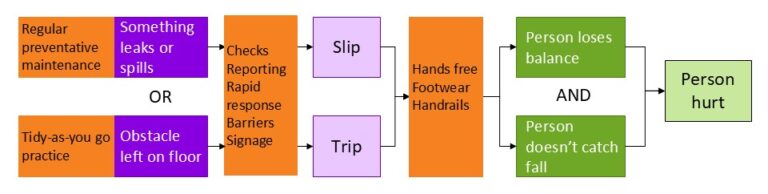
Table 17.6: Controls and monitoring of controls
| Control from flowchart | One-off control | Monitoring |
|---|---|---|
| Regular preventative maintenance | Check PPMs in place on system for all equipment that might leak | Three-monthly check that PPMs closed out, and to identify equipment with higher numbers of breakdown requests |
| Tidy-as-you-go practice | Provide storage for all kit and equipment, and include use of storage and waste facilities in training | Conversations to check understanding of storage and tidy-as-you-go practice |
| Checks | Add checks of wet and uneven surfaces and obstacles to the weekly housekeeping checklist | Supervisor to make spot checks of effectiveness of housekeeping checks, eg by leaving an obstacle to be returned to supervisor |
| Reporting | Include spill reporting process at induction and in refresher training | Monitor numbers of reports of spills Check understanding of spill reporting at team briefs at least once a year |
| Rapid response | Provide written instruction to cleaning contractor about the priority to be given to spills | Track response times to spill cleaning requests |
| Barriers | Purchase easy to move, stable barriers and store near areas prone to spills so these can be placed quickly when there is a spill | Weekly check that barriers and signs are in designated location and undamaged. Check that these are used when a spill is reported. |
| Signage | Store “Wet Floor” signs near areas prone to spills, and include their use in induction training | |
| Hands free | Include the need to have hands free when walking near spill-prone areas in training | Safety observations to check compliance Safety conversations to check understanding |
| Footwear | Provide all staff with appropriate footwear. Include footwear choice in training | |
| Handrails | Induction to recommend using handrails where provided | Monthly inspection of handrails for integrity and cleanliness |
17.10 Back to the start
I started this book with a warning that although many of us have learned about risk assessment as five linear steps, in reality the process involves passing around multiple loops within and between steps. So in finishing this chapter, a reminder that how well you monitor the controls you have decided on will effect the risk you assessed in Part 2. As several of the case studies have shown, the reason risk is often underestimated is because someone assumes that controls are in place, when they aren’t. Sometimes you don’t need more controls, you just need to monitor the ones you think you already have.
Read the finale here.
You can use the Contact form to send me feedback. If you’d like to receive an email when I add or update a chapter, please subscribe to my ‘book club’
Alternatively, go back to the book contents page
Appendix 1: Case studies by year
Appendix 2: Answers to questons posed in each chapter
Appendix 3: Lost HSE references